
Freedom Dental Implants · Louisville, KY
Loose Dentures Keep Slipping? When To Reline, Replace, or Consider Dental Implants
Loose dentures don’t always need replacing. Sometimes the denture is still in good condition, but the gums and jawbone underneath it have changed enough to affect the fit. A reline may correct that problem. However, a denture can also fit the gums closely and still slip, particularly when years of bone loss have left very little ridge to hold it in place.
At Freedom Dental Implants in Louisville, KY, Dr. Regan Ackerman evaluates both the denture and the jawbone before recommending treatment. We offer implant stabilization for patients who need additional support, and in some cases, we can use the dentures they already own. But first, knowing why your dentures have become loose helps us determine how much treatment is actually necessary.
What Causes Loose Dentures?
Conventional dentures depend on the shape of your gums and jawbone to stay in place. Upper dentures generally have an advantage because they cover the roof of the mouth, creating a larger area for suction. Lower dentures rest on a much smaller ridge. Your tongue also moves against them throughout the day, which can make keeping them secure particularly difficult.
The jawbone gradually shrinks after tooth loss. Natural tooth roots once transferred pressure from chewing into the surrounding bone, helping maintain its volume. Without the roots, the ridge becomes smaller, and the gums covering it change shape. A denture made years earlier won’t automatically adjust to those changes.
Several problems can develop as dentures age:
- Loss of jawbone: The ridge that supports the denture becomes shorter and narrower. Lower dentures are especially vulnerable because they have less surface area to begin with.
- Changes in the gums: The tissue covering the ridge changes shape as the bone recedes. Gaps can develop between the gums and the underside of the denture.
- Wear and damage: Artificial teeth gradually wear down, which can change your bite. Cracks or deterioration in the acrylic base may also affect how the denture fits.
People sometimes describe lower dentures that lift or shift during normal jaw movement as floating dentures. Adhesive may help keep them in place temporarily, but it cannot restore the bone that once supported them.
The amount of bone remaining becomes especially important when deciding how to correct a loose denture. We may be able to improve its fit against the gums, but a severely flattened ridge can make retention difficult even when the denture fits properly.
Can a Reline Fix Loose Dentures?
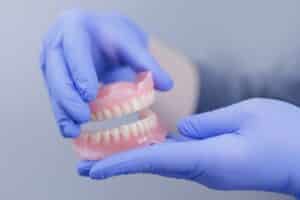
A denture reline is worth considering when the denture itself is still in good condition. We add new material to the underside of the denture and shape it to fit your gums as they are now. The original denture stays in use, with a new surface that makes closer contact with the tissues underneath.
A reline is different from an adjustment. We can often relieve a sore spot or correct a minor bite problem by making small changes to the existing denture. Relining involves reshaping a larger portion of the base to correct changes in its fit.
A reline can improve contact between the denture and the gums, but it cannot restore the height or width of the ridge underneath. If bone loss has left the ridge nearly flat, the denture may continue slipping despite a well-fitted base.
For patients who have already had their dentures relined and still struggle to keep them in place, we need to consider whether the problem is the fit of the denture or the lack of support underneath it.
Denture Reline vs. Implants: Which Solution Is Right for You?
We begin by checking the condition of your existing dentures, how your teeth come together, and how much support the jawbone provides. A denture with worn teeth or damaged acrylic may need replacing. A denture that is still structurally sound may only need an adjustment or reline.
Persistent movement after the fit has been corrected raises another concern. Dental implants can provide retention directly from the jawbone, reducing the denture’s reliance on the gums.
| What We Find | Treatment to Consider |
|---|---|
| Pressure points or minor bite problems | Denture adjustment |
| A denture in good condition that no longer fits the gums closely | Denture reline |
| Worn artificial teeth, damaged acrylic, or significant bite changes | Denture replacement |
| Persistent slipping despite a proper fit | Implant stabilization |
| A worn denture with poor retention | New implant-supported denture |
At Freedom Dental Implants, Dr. Ackerman also considers whether your current denture can be converted into a snap-in denture. We examine the condition of the base, check the bite, and determine whether there’s enough room for the attachments that connect the denture to the implants.
A suitable existing denture may be retained, saving you from purchasing an entirely new set of teeth. If the denture is badly worn or damaged, we can plan a replacement that attaches securely to dental implants.
Find Out Why Your Dentures Keep Slipping
A denture that keeps slipping isn’t necessarily a denture that needs replacing. The problem may be something we can correct with a reline, or the jawbone may no longer provide enough support to keep it secure. Knowing the difference could save you from paying for another denture that leaves you with the same frustration.
At Freedom Dental Implants in Louisville, KY, Dr. Regan Ackerman offers free consultations that include 3D CBCT imaging. We can evaluate your jawbone, discuss implant stabilization, and determine whether your existing dentures could be converted into snap-in dentures.
Schedule your free consultation to learn what it will take to keep your dentures securely in place.
Your free consultation
Clear answers. A plan for your smile.
Meet Dr. Ackerman and discuss your options. Your visit includes a CBCT scan, a treatment plan, and a financing discussion.
Take the first step
Let’s talk about your smile.
Meet Dr. Ackerman. Your free consultation includes a CBCT scan, treatment plan, and financing discussion.
Prefer to call? (502) 937-4930
Patient education
Keep exploring
Minimally Invasive Dental Implants in Louisville, KY
Dental implants are an effective way to replace missing teeth, but concerns about surgery and recovery can keep patients from [...]

Dental Implants Without Bone Graft Surgery: When Is It Possible?
Many patients ask us about getting dental implants without bone graft surgery. Bone grafting is so frequently associated with implant [...]

Affordable Dental Implants That Fit Your Budget
Explore how treatment options, transparent pricing, and financing can help make dental implants fit your budget.
Let’s talk about your smile
Your next chapter starts with a conversation.
Tell us what is holding you back. We will explain your options and help you take the next step with confidence.