Searching “dental bridge” usually means you are missing more than one tooth in a row, and you are stuck between two worries: One is living with a visible gap that makes chewing awkward. The other is hearing that a traditional bridge would mean grinding down healthy teeth on either side of that gap just to hold a false tooth in place. Plenty of people also leave those conversations more confused than before, unsure whether a “bridge” and an “implant” are rivals or parts of the same plan.
At Freedom Dental Implants in Louisville, the dental bridge we place is implant-supported. Implants in the jawbone hold the bridge, so healthy neighboring teeth do not have to be filed down for support.
If you want fixed replacement teeth that stand on their own foundation, book a free consultation with Dr. Regan Ackerman today.
Implant-Supported Dental Bridges vs. Traditional Bridges
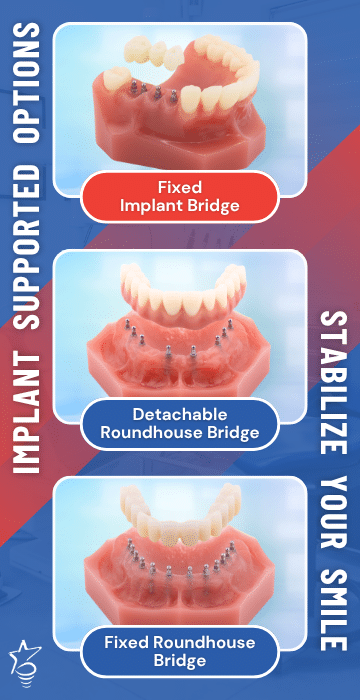 A traditional dental bridge depends on crowns cemented onto the teeth next to the empty space. Those “abutment teeth” get reshaped first, even when they are healthy. An implant-supported dental bridge skips that tradeoff. Dr. Regan Ackerman places implants where the roots used to be, then attaches a custom bridge to those implants. Your remaining natural teeth stay intact when they are healthy, and the restoration does not rely on them as anchors.
That is why Freedom Dental Implants focuses on implant-supported bridges. Patients often arrive asking whether they should “get a bridge or get implants.” In our office, the answer is usually both ideas working together: implants create the support, and the dental bridge fills the span of missing teeth.
A short segment bridge can replace a few teeth in one area. A full-arch roundhouse bridge replaces an entire upper or lower set. It’s the same implant-supported idea but at a different scale.
People who move from a removable plate or a traditional bridge to a fixed implant bridge often notice a bigger jump in comfort than they expected. In one clinical study of implant patients, overall satisfaction rose from a score of 3.5 before treatment to 8.2 at six months, with clear gains in function, comfort, and day-to-day quality of life.
Is a Dental Bridge Right for the Teeth You Are Missing?
An implant-supported dental bridge tends to fit well when several teeth are already gone in a row, when failing teeth will leave a multi-tooth gap after they come out, or when you want fixed teeth without reshaping healthy neighbors for a traditional bridge. Some patients are missing three or four teeth in one quadrant. Others are weighing the significant differences between a roundhouse bridge and a denture.
No matter your situation, candidacy still comes down to your bone, medical history, and goals. Dr. Ackerman reviews your 3D CBCT scan with you and uses what she sees to plan around your anatomy. Even with bone loss, implants are often still an option. Freedom Dental Implants places one-piece dental implants in several widths, including narrower mini implants for areas where a larger size may not work.
If teeth need to be extracted first, Dr. Ackerman typically allows the bone about 3 months to heal before placing the implants. This waiting period gives the extraction sites time to heal, leading to better treatment outcomes. Our approach may differ from clinics that market extraction and implant placement in one rushed visit for nearly every case.
How Dental Bridge Placement Works
Knowing what to expect can make it easier to decide if a dental bridge is right for you. At Freedom Dental Implants, implant-supported dental bridge treatment typically follows a series of steps:
Free consultation: You meet Dr. Ackerman in person. The visit includes a CBCT scan, a written treatment plan, and a conversation about fees and financing. If you feel nervous about dental treatment, you can also ask about nitrous oxide sedation to help you feel more comfortable during your visits.
Preparatory work when needed: If you have teeth that cannot be restored, Dr. Ackerman removes them before moving ahead with implant treatment. She also explains if bone grafting or a minimally invasive sinus lift is needed and why. After extractions, the sites usually heal for about three months so your implants sit in solid bone.
Implants and bridge placement: We place one-piece dental implants in a single stage. That means we can place the implants and attach a restoration on the same day. You’ll leave your visit with a temporary bridge while the implants integrate and the lab makes your custom bridge. Once your final bridge is ready, Dr. Ackerman will remove the temporary and secure your new bridge to the implants.
Dental Bridge Costs in Louisville, KY
The cost of your dental bridge treatment depends on how many teeth you need to replace and how many implants are needed to support that span.
Single-tooth implant crown: If you’re missing one tooth, you’ll typically need one implant topped with a dental implant crown. At Freedom Dental Implants, this treatment costs $2,500.
Multi-tooth dental bridges: If you’re replacing several teeth, the cost depends on what you need. The number of implants, the size of the gap, and any preparatory treatment you need can all affect the final fee. Since every case is different, we’ll give you a personalized cost estimate at your free consultation so you know what to expect from the outset.
Full-arch roundhouse bridges: $16,500 per arch. This fee covers detachable and fixed options. Detachable bridges stay in place for daily life and come off only in the office for maintenance. Fixed bridges stay put all the time.
Many patients find our fees 25% to 50% lower than plans they bring from other offices. If you have a treatment plan from another office, bring it to your consultation. We’ll review it and work to match or improve the price without cutting quality.
If you’re concerned about fitting treatment into your budget, we offer financing through several lenders. Happen Bank (formerly LendingClub), Cherry, and CareCredit offer payment plans that let you spread the cost over time, making treatment easier to manage within your monthly budget.
Who Plans and Places Your Dental Bridge
Implant support under a bridge is a long-term investment in how you chew and smile, so the team behind that work matters as much as the restoration itself.
Freedom Dental Implants is a small, female-owned, family-run office rather than a big-box operation. Our team gets to know the patients we treat, which keeps communication simple if questions come up.
For more than 20 years, we have focused on implant care for patients with missing teeth in and around Louisville. Dr. Ackerman has placed roughly 10,000 implants throughout her career and currently places about 1,300 annually. She is the implant dentist you see at the consultation, at placement, and at all follow-up visits.
Dr. Ackerman’s hands-on experience is paired with continued involvement in implant dentistry. Her affiliations include the Mini Dental Implant Centers of America and the Implant Centers of America. She also holds diplomate status with the International Academy of Mini Dental Implants (IAMDI), demonstrating her exceptional knowledge of dental implant treatment.
If you have sat through a consult where you barely met the doctor or felt pushed to decide before you understood the plan, the pace here is different. Dr. Ackerman diagnoses first, explains the implant-supported options that fit your gap, and builds the treatment plan with you before any commitment.
Fill the Gap in Your Smile Without Jeopardizing Healthy Teeth
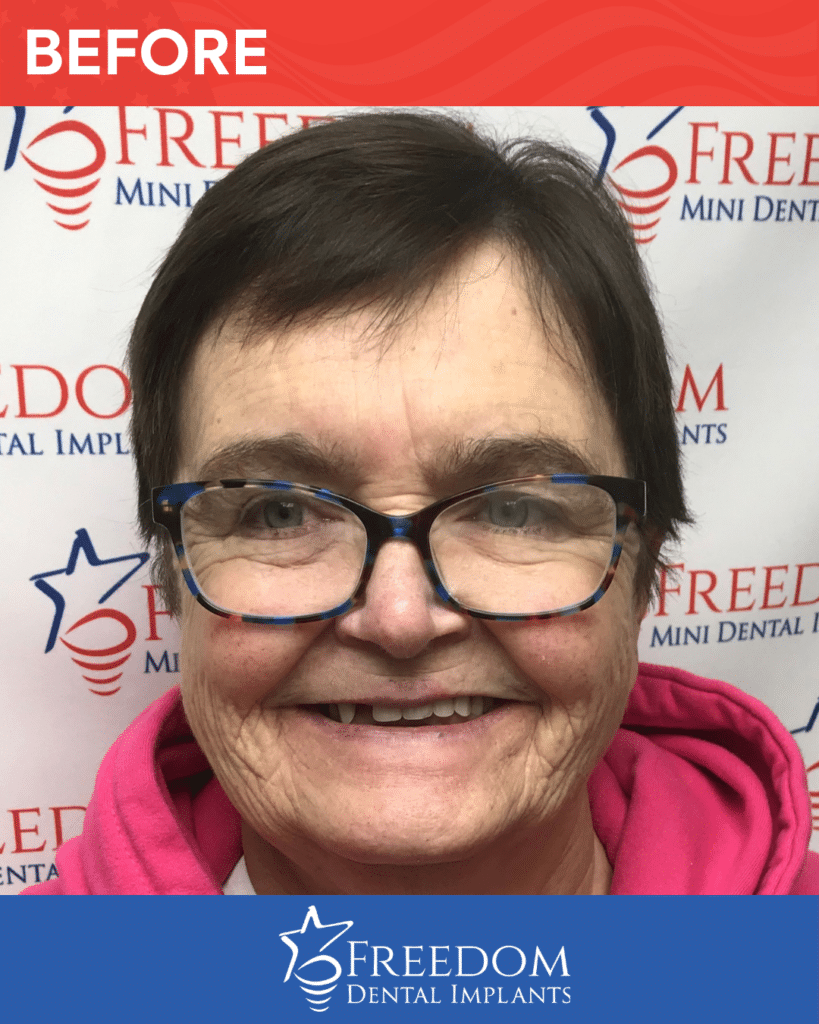
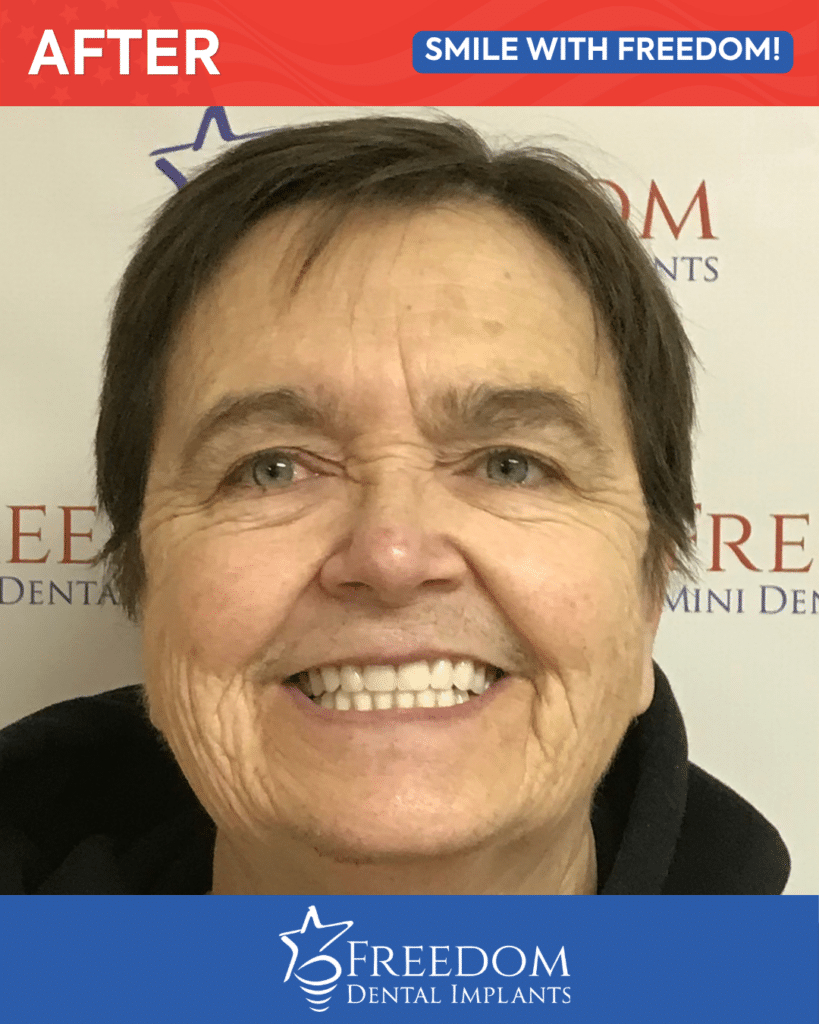
If you’re missing several teeth, we can often replace them without altering healthy neighboring teeth. An implant-supported dental bridge gives those replacement teeth their own roots in the bone. Depending on your needs, the bridge can replace a small section of teeth or an entire arch.
At Freedom Dental Implants, Dr. Ackerman helps clear up the questions that can make dental implant treatment feel complicated. She’ll review your CBCT scan with you and explain the type of bridge and number of implants needed to support your dental goals.
Schedule your free consultation today and see what a fixed, implant-supported dental bridge could look like for you.