
Freedom Dental Implants – Louisville, KY
How to care for your mini implant supported dentures: tips and tricks for long lasting results
Practical Louisville tips for caring for the denture itself on mini implants – snap-in remove-and-clean, attachment care, overnight soaking, gentle water flossing, and habits that help your prosthesis last.
How to care for your mini implant supported dentures is about the prosthesis you wear every day – not only the implants in the bone. At Freedom Dental Implants in Louisville, Dr. Regan Ackerman, DMD, plans snap-in and full-arch restorations on one-piece mini and conventional implants. This guide focuses on denture care: how to remove and clean a snap-in appliance, protect attachments, soak overnight, rinse around implants with a soft brush or water flosser, and know when to schedule a checkup. For broader implant hygiene (brushing the fixtures, habits that stress bone and gums), see our related post on tips for maintaining mini dental implants.
Quick answers
- Denture focus: Remove the snap-in denture to clean acrylic, housings, and implant tops – not only brush while it is seated.
- Soft tools: Soft toothbrush for the denture and gums; gentle water flosser or irrigator around implants as directed.
- Overnight: Soak the denture in a cleaner recommended for your appliance unless Dr. Ackerman gives different instructions.
- Attachments wear: Loose snap, different click, or uneven seating often means retention parts need service.
- Free consult: 3D CBCT scan, written plan, and financing discussion with Dr. Ackerman.
Why denture care is different from implant hygiene alone
Mini implant supported dentures combine titanium anchors with a removable (or team-maintained) set of teeth. Plaque and food collect on the acrylic, under the base, and inside the snap housings. If the prosthesis stays dirty while the implants look “clean enough,” gums still get irritated and retention suffers. Caring for the denture is the other half of long lasting results.
Freedom is a family-run, locally owned, female-owned practice. Dr. Ackerman stays with you from consult through follow-up so your home-care steps match the attachments she placed. How the system works is covered in our guide to mini implants, big results: a guide for mini implant-supported dentures and our overview of Freedom mini dental implants.
Snap-in remove, clean, and reseat
Removable snap-in dentures are designed to come out at home. Take the denture out over a towel or basin of water so a drop does not crack the acrylic. Brush the chewing surfaces, the tissue side, and the attachment housings with a soft brush. Rinse the implant tops and gums before you snap the denture back on.
After meals, rinse when you can. Do not scrub with abrasive household cleaners, bleach, or scouring powders – they scratch acrylic and can damage soft liners or retention inserts. Use a cleaner recommended for your appliance. Why many patients choose this remove-and-clean design is explained in mini dental implants are a great choice for removable snap-in dentures.
Attachment and housing care
The snaps that lock your denture onto mini implants are wear parts. Food and plaque inside a housing make the denture feel sticky, hard to seat, or uneven. Clean those areas daily with a soft brush. Do not dig metal instruments into the housings or force the denture on at an angle.
Call the office if the snap feels loose, clicks differently, rocks on one side, or will not seat the way it used to. Retention inserts and housings can be serviced so you do not keep compensating with adhesives or biting harder. Day-to-day advantages of a secure snap-in path are also in our guide to the benefits of mini implant dentures.
Soft brush and water flosser around the implants
After the denture is out, brush the gums and implant tops gently with a soft toothbrush. Angle bristles toward the gumline. Light pressure is enough – hard scrubbing irritates tissue and does not clean better. A non-abrasive toothpaste is usually fine; ask at recall if you should change products.
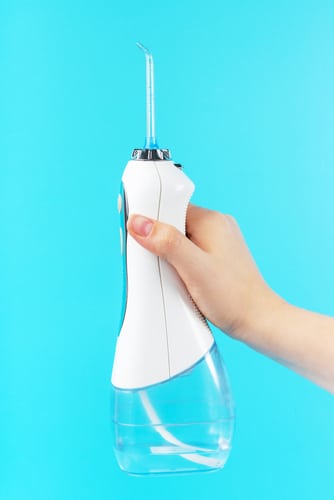
A water flosser (oral irrigator) can help rinse around mini implants when used on a low setting and aimed at the gumline. Follow the device instructions. Do not blast high pressure into sore or healing tissue. A water flosser supports brushing; it does not replace it or professional cleanings. We mention water flossing as a common home tool – we do not endorse a specific brand. Dr. Ackerman or the team can show you a safe technique at your visit.
Overnight soaking and what to leave out of the routine
Most snap-in patients soak the denture overnight in a cleaner made for dentures or your specific appliance, then rinse well before reseating in the morning. Never sleep with a dirty denture in place unless Dr. Ackerman gives different instructions for your case. Keep the denture moist when it is out of the mouth so acrylic does not warp.
Avoid using the denture to open packages, chew ice, crack hard candy, or bite fingernails. Those habits chip acrylic and stress attachments. If you clench or grind, tell the office – a night guard or other plan may protect the prosthesis. Smoking and poorly controlled health conditions can affect gum health around implants; share updates at every visit. More basics are in our mini implant FAQs.
Checkup schedule and when to call
Keep your scheduled recall visits. Professional checks catch worn inserts, acrylic wear, gum changes, and bite issues before they become larger problems. Contact us sooner for lasting pain, swelling, bleeding that does not stop with gentle care, an implant that feels mobile, or a denture that will not snap securely.
Call (502) 937-4930. The office is at 4906 Bardstown Road Suite 104. Hours are Monday through Thursday, 8:30 a.m. to 4 p.m. Patients from nearby communities are welcome for consults and ongoing care.
Listed fees and financing (for context)
Single tooth implant and crown: $2,500.
Snap-in denture: $7,500 per arch.
Fixed or detachable bridge: $16,500 per arch.
Fees listed as of September 2026. Your written plan lists anything else you may need. We offer a 5% discount for payment by check. Lisa helps explain Happen Bank, Cherry, and CareCredit applications. Financing is subject to the lender’s approval and terms. We are out of network with all dental insurance plans, but Lisa can help file paperwork so eligible benefits can reimburse you directly.
Healing and placement timing
When extractions are needed, we typically allow about three months of healing before placing implants. We do not extract teeth and place implants at the same visit. After implants go into a healed site, a planned snap-in or temporary can often be attached the same day when stability allows. Final teeth follow your restoration schedule. The care tips in this post apply once your implants and denture are in place and you have been cleared for normal home care.
How the free consultation works
Your visit includes time with Dr. Ackerman, a 3D CBCT scan, a full treatment plan, and a financing discussion. She evaluates bone, bite, health history, and goals – including how you will care for a snap-in or fixed design day to day. Meet her on our about page. Whether you are planning treatment or already wearing mini implant supported dentures, we will review the prosthesis-care steps that fit your case.
Common questions about mini implant denture care
How is this different from general implant maintenance tips? That related guide covers implant and gum hygiene broadly. This post focuses on the denture prosthesis: remove-clean-reseat, housings, soaking, and longevity habits for the appliance itself.
Should I soak every night? Most snap-in patients soak overnight with a recommended cleaner, then rinse before reseating. Follow the written instructions for your appliance.
Can I use a water flosser every day? Many patients do, on a gentle setting around the implants after the denture is removed. Confirm technique at your recall visit.
Will care differ for a fixed or detachable bridge? Yes. Those designs stay in more of the time and need careful brushing plus professional maintenance. Your written plan explains your specific routine.
Office hours? Monday through Thursday, 8:30 a.m. to 4 p.m. Call (502) 937-4930.
Your next step at Freedom
Your free consultation includes a CBCT scan, a full treatment plan, and a financing discussion. If you want clear tips for how to care for your mini implant supported dentures in Louisville – or you are ready to plan treatment – we will explain your options and help you take the next step with confidence.
Your free consultation
Clear answers. A plan for your smile.
Meet Dr. Ackerman and discuss your options. Your visit includes a CBCT scan, a treatment plan, and a financing discussion.
Call (502) 937-4930Take the first step
Let’s talk about your smile.
Meet Dr. Ackerman. Your free consultation includes a CBCT scan, treatment plan, and financing discussion.
Prefer to call? (502) 937-4930
Patient education
Keep exploring

What you need to know about mini dental implant placement
Learn what to expect before, during, and after a mini dental implant placement appointment.
Healing time after a tooth extraction and mini implant placement
Understand the healing stages after tooth extraction and how they affect the timing of mini implant placement.

A comprehensive guide to the mini dental implant process
Follow the main stages of mini implant treatment, from consultation and planning to your final restoration.
Let’s talk about your smile
Your next chapter starts with a conversation.
Tell us what is holding you back. We will explain your options and help you take the next step with confidence.
Request a free consultation Call (502) 937-4930