
Freedom Dental Implants · Louisville, KY
Tooth Extraction in Louisville, KY
Conservative decisions today. A thoughtful plan for replacement teeth tomorrow.
Freedom Dental Implants · Louisville, KY
Conservative decisions today. A thoughtful plan for replacement teeth tomorrow.
Hearing that a tooth may need to come out can immediately raise a bigger question: What happens to the rest of my teeth? Will those need to come out, too? If you’re already dealing with missing, damaged, or failing teeth, it’s understandable to worry that a tooth extraction could turn into a much larger treatment plan than you expected.
At Freedom Dental Implants, Dr. Regan Ackerman takes a conservative approach. If a tooth can stay, she prefers to keep it. When extraction is the right next step, she plans ahead for what comes after, including bone preservation, healing, and eventual tooth replacement.
That means we don’t treat your extraction as an isolated procedure. Dr. Ackerman considers how the site will heal and how to best preserve the bone for future implant treatment.
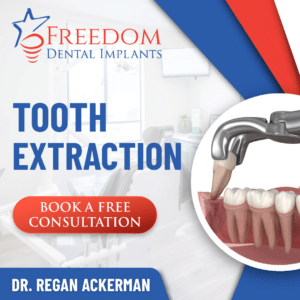 We need to extract a tooth if it’s too damaged to be saved. Severe decay, a deep fracture, or an infection can sometimes leave too little healthy tooth structure for a predictable repair. If a tooth is no longer healthy enough to keep, extraction is often the first step before replacing it with a dental implant or denture.
At Freedom Dental Implants, Dr. Ackerman takes a conservative approach to extractions. If a tooth can be restored, she doesn’t recommend removing it. Keeping a healthy or restorable tooth is often the better choice for your mouth. Natural teeth have a periodontal ligament that cushions chewing forces and provides sensory feedback that an implant can’t fully replicate. Keeping the natural root also helps preserve the surrounding jawbone. Removing a tooth, on the other hand, starts a process of bone loss in that area.
Additionally, once we extract a tooth, we can’t reverse that decision. We can remove a tooth later if a filling, crown, or root canal fails, but we can’t put an extracted tooth back. Starting with the reversible option keeps more choices open.
While dental implants are an excellent replacement when a tooth is beyond repair, they still come with their own considerations and maintenance needs. That’s why Dr. Ackerman doesn’t recommend removing teeth just to simplify or speed up treatment. If a tooth can reasonably stay, keeping it is part of being honest about what you actually need.
We make that decision at your free consultation. At this visit, Dr. Ackerman examines your mouth and takes a CBCT scan. This scan gives her a precise 3D view of your teeth and jawbone. From there, she can determine which teeth to keep, which may need to come out, and how an extraction fits into your long-term tooth replacement plan.
Some implant offices advertise removing a tooth and placing an implant in the same visit. Dr. Ackerman takes a more measured approach.
If a tooth needs to come out, she typically removes it first and adds bone grafting material to the socket. The graft provides a framework for new bone to grow into and helps preserve your jaw’s height and width. Without it, bone in that area can shrink after an extraction, which could limit your implant options later.
After extraction, Dr. Ackerman gives the jaw about three months to heal before placing the implant. That healing time gives the extraction site a chance to recover and gives Dr. Ackerman stronger, more dependable bone to work with when it’s time to place the implant.
Waiting for the extraction to heal adds some time to the overall process, but it’s intentional. Rather than rushing straight from extraction to implant placement, Dr. Ackerman focuses on creating the healthiest foundation she can for your replacement tooth.
By the time you arrive for your extraction, Dr. Ackerman will already have reviewed your imaging and treatment plan with you, so you’ll know which tooth needs to come out and what comes next. Before she begins, she also takes another careful look at the area and your 3D imaging to plan the extraction and bone graft as precisely as possible. She will then ensure the area is thoroughly numb before starting the procedure.
Dr. Ackerman performs the extraction herself, with John assisting chairside. After she removes the tooth, she may place bone grafting material in the socket to help preserve the area for a future dental implant.
After the procedure, we’ll explain how to care for the area as it heals. If an implant is part of your treatment plan, the next few months give the bone time to recover and create a stronger foundation for placement.
After your extraction, the next few days are focused on protecting the area and supporting healthy healing. Dr. Ackerman will send you home with oral surgery aftercare instructions, including how to keep the area clean, what foods to avoid for a bit, and what to watch for as you heal.
If an implant is part of your treatment plan, the extraction site will heal for about three months before Dr. Ackerman places the implant. During that time, you don’t have to live without teeth. Depending on your situation, you may wear a temporary option such as an immediate denture or flipper while the area heals.
Once the bone is ready, Dr. Ackerman can place a one-piece implant and restore it with the option that fits your needs:
The healing period may feel like a pause, but that time helps prepare you for the next stage of treatment. Giving the bone time to recover helps create better conditions for the implant and the new teeth it will support.
A tooth extraction should solve the problem in front of you; it should never create new ones. At Freedom Dental Implants, Dr. Ackerman carefully assesses which teeth truly need to come out, protects the bone when an extraction is necessary, and gives the area time to heal before moving ahead with implant treatment.
When the time is right, she can replace missing teeth with one-piece implants supporting a crown, bridge, snap-in denture, or roundhouse restoration. If you’re facing a possible extraction and want a clear plan for what comes next, schedule a free consultation with Dr. Ackerman today.
Before your visit
You can usually start eating once the numbness wears off. However, start with soft foods such as yogurt, eggs, mashed potatoes, soup (not too hot), applesauce, or smoothies eaten with a spoon. Avoid crunchy, sticky, spicy, or very hot foods for the first few days, since they can irritate the area.
One important rule: skip the straw. Suction can disturb the blood clot that protects the extraction site. If you dislodge the blood clot, you may experience a painful condition called dry socket. Chew on the opposite side when you can, and ease back into your normal diet as the area becomes more comfortable.
Most patients feel noticeably better within a few days, although the exact timeline depends on which tooth was removed and how involved the extraction was. Soreness, swelling, and tenderness are usually most noticeable early on and then improve steadily.
Many people can return to normal daily activities within a day or two, as the extraction site continues to heal. If your treatment plan includes a dental implant, Dr. Ackerman waits approximately three months before placing the implant. That gives the bone time to recover before the next stage of treatment.
Yes, you can often get a dental implant even if you had the tooth removed years ago. The main question is how much bone remains. The jaw naturally resorbs or deteriorates after a tooth is gone, which may mean you’re not a good candidate for certain large-diameter implants.
Dr. Ackerman uses 3D imaging to evaluate the site and see what options make sense. If bone loss has narrowed the ridge, a one-piece mini dental implant may be the right choice. These narrow-diameter implants can fit in less bone, so many patients who thought (or were told) implants were no longer an option may still qualify for treatment at our office.
Real patients. Personal care.
A tooth extraction can be the beginning of a larger plan to restore your smile. At Freedom Dental Implants, Dr. Ackerman removes only teeth that can’t be saved, protects the surrounding bone when possible, and plans ahead for the replacement that will follow. The smile shown here reflects what can come after that careful approach: a complete smile rebuilt with the right restoration for the patient.
Schedule a free consultation to find out whether extraction is necessary and what your options are for replacing the tooth afterward.
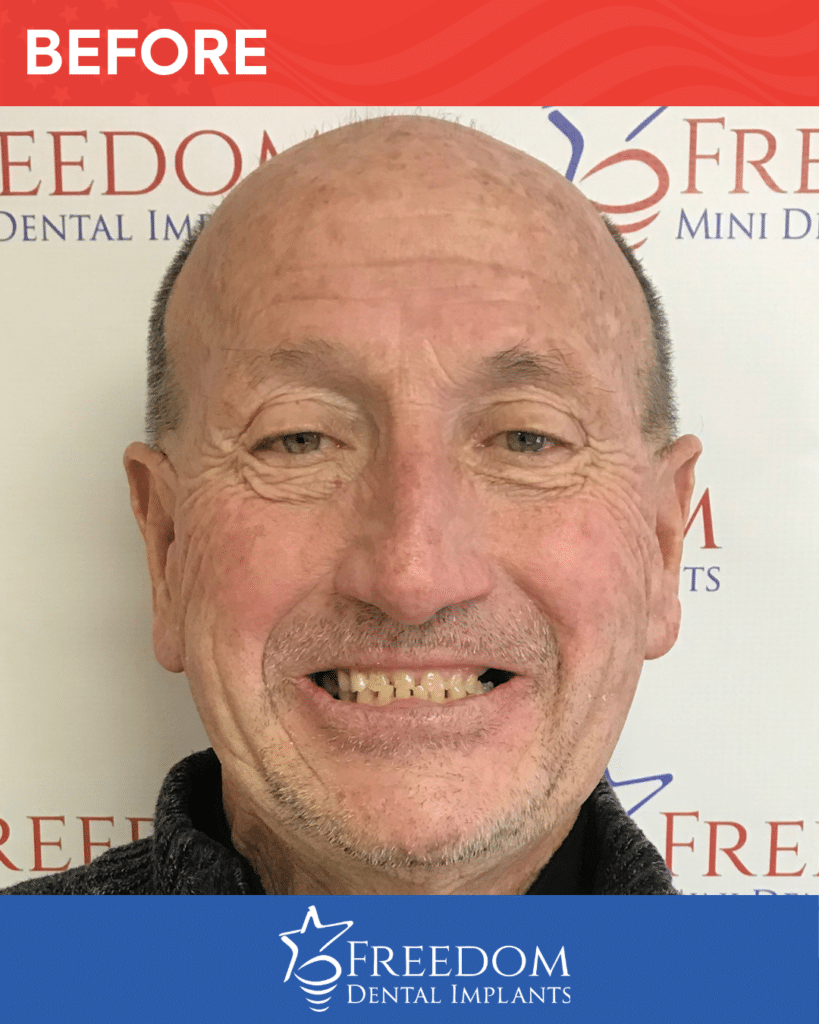
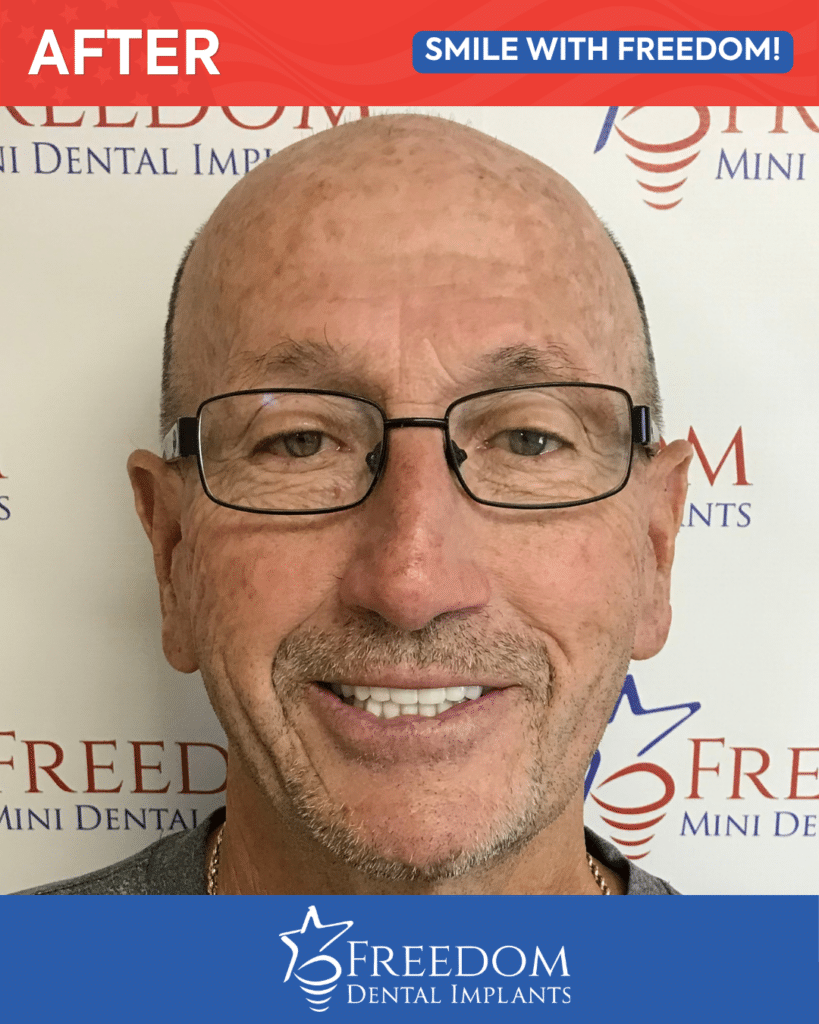
A smile from our practice. Individual results vary. Photos show the patient’s own starting point and result.

We are a family-run practice, and you see Dr. Regan Ackerman from your first consultation through treatment. We recommend care for the teeth that need it and preserve healthy teeth whenever possible. We use both mini and conventional-sized one-piece implants, choosing the size and restoration that fit your mouth.
Contact us today to arrange a free consultation.
Let’s talk about your smile
Tell us what is holding you back. We will explain your options and help you take the next step with confidence.
Request a free consultation Call (502) 937-4930